Bible Trivia and Word Games
- 4.9
- Rating
- 100.00K
- Installs
- Free
- Price
 Analysis by App-foxy
I found Bible Trivia to be the kind of word game that makes a quiet moment feel a little more purposeful. It is built around Bible-themed trivia and word challenges rather than fast action, so the appeal comes from remembering, learning, and working through questions at a comfortable pace. After spending time with it, my main question was not whether it is enjoyable at first, but whether it deserves a regular place on a phone once the initial curiosity wears off.
My answer is cautiously positive. The game is free to start, rated for Everyone, and developed by Appgeneration - Radio, Podcasts, Games. It has reached over one hundred thousand installs, with a 5.0 average from around four and a half thousand ratings. Those figures suggest that the simple concept connects with a specific audience: people who enjoy Bible knowledge, casual word play, or both. I would not recommend it as a replacement for a serious study tool, but I can see it working well as a short daily activity.
What the first week feels like
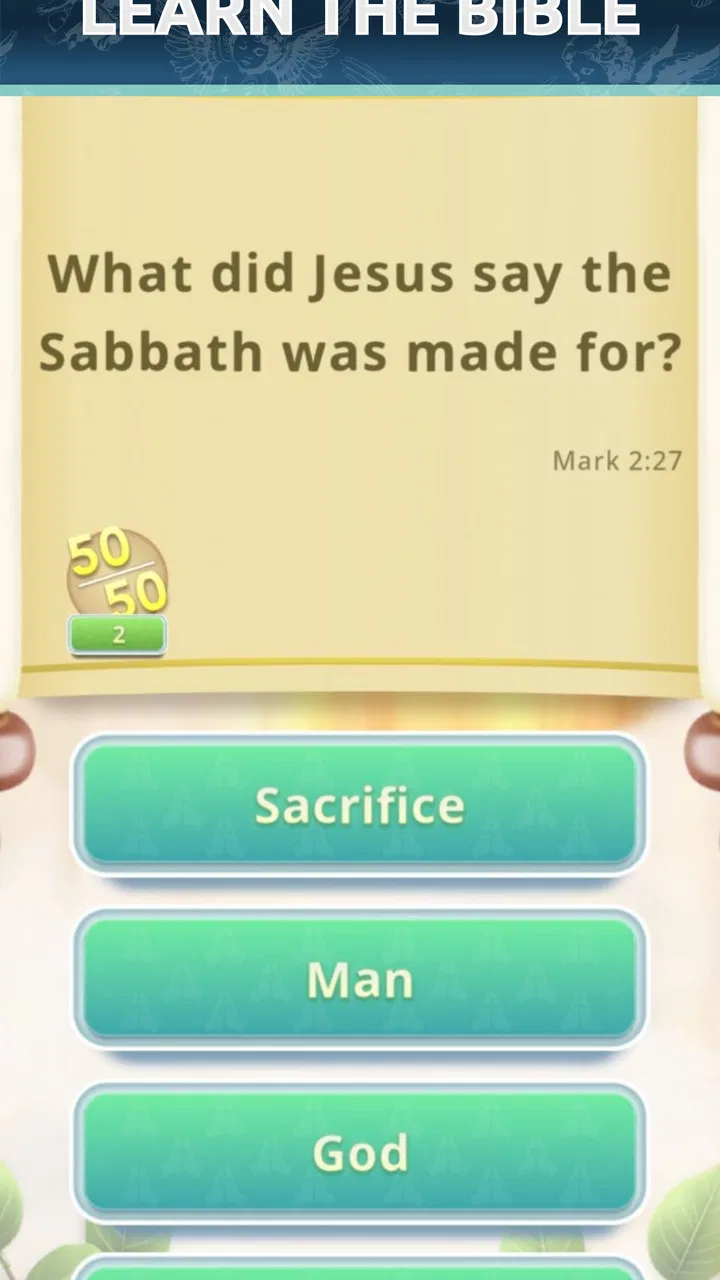
The first few sessions are easy to understand. You open the game, face a Bible-related question or word task, and rely on memory, recognition, and a little deduction. That simplicity is a strength. I did not need to learn a complicated control scheme or spend time adjusting a large set of options before playing. The focus stays on the question in front of me.
You May Also Like

 Blood Strike: 2.5 Anniversary
Blood Strike’s Loadouts Turn Every Drop Into a Tactical Gamble
A close look at Blood Strike’s custom loadouts: how fast access to signature weapons reshapes its battle royale rhythm, rewards preparation, and narrows the gap between fights.

 Pandora - Music & Podcasts
Pandora’s Music Is Easy to Start, but Harder to Recover
Pandora’s strength is its low-effort path from a seed to a station. Its weak spot is how much confidence it asks you to place in connection, setup, and quiet recovery.

 8 Ball Pool
 Is Built on Rivalries, Rematches, and Routine
A close look at the rivalries, rematches, shared routines, and unanswered safety questions that turn a quick pool match into a persistent mobile community.

 Samsung Music
’s Quiet Strength Is Playing What You Already Own
Its reach comes less from spectacle than from dependable access to a personal library. That simplicity is both the app’s strongest retention engine and its ceiling.

 AccuWeather: Weather Radar
AccuWeather Review: A Quick, Clear Forecast for Everyday Decisions
For everyday plans, the best forecast is the one you can understand quickly. AccuWeather makes rain timing, radar, and local conditions easy to act on, with a few trade-offs.

 Hill Climb Racing
Why Hill Climb Racing Still Turns Crashes Into One More Run
A tiny car, a bumpy hill and one more upgrade: Hill Climb Racing keeps resurfacing because its simple chaos makes every near-miss feel personal.
More From Our News Desk



That makes the game especially approachable for players who do not usually play games. Someone who finds action games stressful or traditional trivia apps too broad may feel more comfortable here because the subject has a clear identity. The Bible focus also gives each question a little more weight than a random general-knowledge prompt. Even when I knew the answer, the wording could encourage me to remember the surrounding story, person, place, or teaching.
The word-game element changes the rhythm compared with a standard quiz. Instead of simply tapping through a long sequence of multiple-choice questions, I had to pay attention to spelling, clues, and the relationship between words. That small shift matters. It makes the experience feel less like checking answers and more like actively retrieving information.
The best early use is a short, focused session rather than an extended marathon. I would play it while waiting for an appointment, during a break, or after reading a Bible passage. In those situations, the game adds a quick test of recall without demanding the commitment of a full study session. It can also work as a gentle conversation starter in a family setting, where players compare answers instead of competing intensely.
Who is likely to enjoy it immediately?
The obvious audience is Christian players who already enjoy quizzes, crosswords, or word puzzles. However, the game can also suit someone who wants a light way to revisit familiar Bible material. It is not necessary to approach every round as a formal lesson. I found more value in treating it as a prompt to notice what I remembered and what I had forgotten.
It may be particularly suitable for older relatives or less experienced mobile gamers because the central idea is familiar. A person who is comfortable answering questions but not with complex game interfaces can understand the attraction quickly. The Everyone age rating reinforces that broad accessibility, although parents should still consider whether the religious subject matches what they want a child to play.
It is less suitable for a player looking for a broad trivia challenge covering science, sport, cinema, geography, and current events. Bible Trivia deliberately narrows the subject. That focus is the reason it feels relevant to one group and limited to another. If you want variety above all else, a general trivia app will probably remain more interesting over time.
How it compares with ordinary Bible study and other word games
A Bible study app usually gives more context, structure, and room for reading. Bible Trivia does something different: it turns recall into an activity. I would use a study app when I want to understand a passage in depth, compare translations, or follow a planned reading routine. I would use this game when I want to test whether that knowledge is staying with me.
Compared with a normal crossword or word puzzle, the subject matter gives the clues a consistent theme. That can make the game feel more meaningful, but it also reduces the surprise and variety that keeps a general word game fresh. A conventional word app may offer a wider range of puzzle formats, while this one has the advantage of a clear purpose.
The practical difference is motivation. If Bible content already matters to you, a correct answer can feel rewarding beyond the game itself. If it does not, the same question may feel like a narrow obstacle rather than an invitation to learn. That is an important distinction before downloading it.
What remains useful after the novelty
After the novelty settles, I’d keep the game useful by giving each session a small purpose: revisit a passage, notice which details I remember, or bring a question into a family conversation. That makes short play feel more like a prompt for reflection than another score to chase. The next question is whether that modest routine can stay enjoyable without turning into pressure.
Building a small recurring habit
The long-term value depends on how you use it. I would not expect the game to become an all-evening hobby. Its stronger role is as a repeatable five-minute habit attached to something that already happens, such as morning coffee, a commute as a passenger, or a quiet period before bed. Linking it to an existing routine makes the game more likely to survive after the first week.
A useful approach is to treat each session as a memory check, not as a performance test. If I miss a question, I can pause and think about why: did I confuse two people, forget a detail, or simply read too quickly? That reflection creates more lasting value than rushing through answers to protect a perfect-looking result.
Another good workflow is to play after reading rather than before. Reading a short passage first gives the questions a fresh context, while playing first can reveal which parts of the subject deserve another look. This turns the game into a follow-up activity instead of allowing it to stand in for reading and interpretation.
For families, the game can support a low-pressure shared routine. One person can read a question aloud while others answer, or players can discuss why an answer seems correct. That use is more durable than solitary tapping because the conversation adds variety. The game becomes a starting point for recall and discussion rather than the entire activity.
Where month-to-month value may weaken
Every focused trivia game faces the same challenge: once the player has seen many questions, the surprise can fade. Bible Trivia has a built-in advantage because the subject contains a large body of material, but that does not automatically guarantee endless freshness. My interest would depend on whether I continued learning from difficult questions instead of only repeating familiar ones.
Players with strong Bible knowledge may move quickly through easier material and begin to notice repetition sooner. Newer learners may have the opposite experience, finding the game useful but occasionally frustrating when several questions depend on details they have not encountered. The same design can therefore feel relaxing to one person and demanding to another.
The most sustainable expectation is modest. I would keep it installed as a recurring companion to reading or discussion, not as my only word game. Switching between it and a broader puzzle app can prevent the subject from feeling overused. That is not a criticism of its focus; it is simply the trade-off that comes with choosing a specialized game.
The current version is 1.6.7, and the game requires at least OS 10. For someone with a compatible Android or iOS device, that makes the technical entry point straightforward. Still, compatibility is only the first question. The more important one is whether the player enjoys returning to the same religious theme repeatedly.
What can make continued use feel tiring?
The first source of fatigue is repetition. Even when a question is useful, seeing similar wording too often can turn a thoughtful exercise into a routine tap. I would avoid playing for long stretches for that reason. Short sessions protect the sense of discovery and make it easier to remember which questions actually challenged me.
The second source is uneven personal knowledge. A player may know the major stories but struggle with names, chronology, or less familiar details. That can be educational, yet repeated misses may become discouraging if the game does not feel like it is helping the player understand the answer. I found it better to approach mistakes with curiosity rather than treat them as evidence of failure.
There is also a possible attention problem common to free mobile games. Bible Trivia is free to download, but optional in-app purchases range from $0.99 to $22.99 per item. That does not make the game poor value by itself, and many players may never need to buy anything. However, anyone trying to keep a completely purchase-free phone should pay attention to how the experience is presented and decide whether the free portion is comfortable for them.
My advice is to judge the game by its free everyday usefulness before spending money. If it already fits your routine, an optional purchase may feel easier to evaluate. If the basic loop is not holding your attention, paying will not solve the underlying problem of limited interest.
Maintenance: what the player must do
The maintenance burden is low in the ordinary sense: this is not an app that requires a complicated setup or a large personal library before it becomes playable. The real maintenance is personal. You need to choose a sensible session length, resist turning every round into a test of worth, and occasionally connect questions with actual reading or conversation.
That makes it different from a Bible reading plan, which asks for steady progress through selected material. It is also different from a competitive word game that may depend on daily streaks or constant score chasing. Bible Trivia works best when I decide what role it has. If I expect it to teach everything, it will disappoint me. If I use it to refresh memory and encourage curiosity, it earns more space.
Storage decisions are also simple. I would keep it installed on a device used for casual reflection or family play. I would remove it if I noticed that I was answering mechanically, skipping questions without thinking, or opening it only because it was already on the screen. A game should support a habit, not become another source of digital clutter.
Questions a prospective player should consider
If you are wondering whether it is suitable for beginners, my view is yes, provided you are comfortable learning through questions. It is not a substitute for explanations, so a newcomer may want a Bible, reading app, or trusted guide nearby. The game is more welcoming as a companion than as a complete introduction.
If you are asking whether it can replace a regular word game, I would say only if your priority is Bible-themed content. Players who want an endless mix of subjects, creative word construction, or a large range of puzzle styles will probably be happier with a general alternative. The focused theme is both its identity and its main limitation.
If you are deciding whether children can use it, the Everyone rating makes it broadly accessible, but I would still play alongside younger users at least initially. That gives you a chance to explain unfamiliar references and turn a difficult answer into a learning moment. The rating describes age suitability; it does not replace a parent’s judgment about religious content or learning goals.
If you are concerned about paying, the game is free to begin, with optional purchases available. I would start without spending, see whether the questions fit your routine, and only then consider whether any paid option adds enough value for your personal use. This is especially sensible for a specialized game that may appeal strongly to one household and not at all to another.
If you are looking for a serious study resource, choose something designed around reading, commentary, search, and structured learning instead. Bible Trivia can prompt you to open those resources, but its strength is active recall and casual engagement, not detailed explanation.
My long-term verdict
After the first-week appeal fades, Bible Trivia still has a reasonable case for staying installed, but only for the right player. I like its clear purpose, approachable word-game format, and ability to turn spare minutes into a small exercise in Bible recall. The free entry point also makes it easy to test without committing to a purchase.
Its lasting value comes from restraint. Play it briefly, connect difficult questions with further reading, and use it with other people when possible. Those habits keep the game from becoming a repetitive quiz loop. If you need broad trivia variety or deep study tools, another app will serve you better. If you want a focused Bible word game that can support a modest recurring routine, this one is worth trying.
For me, it earns a place as an occasional companion rather than a permanent main game. That is still a meaningful recommendation. The product does not need to dominate my screen to be useful; it only needs to give me a good reason to return when I want a quick, thoughtful challenge. Its strongest promise is not endless entertainment, but a simple way to keep Bible knowledge active between longer moments of reading and reflection.
FAQs for Bible Trivia and Word Games
01What types of questions are included in Bible Trivia and Word Games?
Bible Trivia and Word Games feature a wide range of questions that cover both the Old and New Testaments. Users will encounter queries about key biblical figures, events, and teachings. The game is designed to cater to various knowledge levels, offering something for beginners and seasoned Bible enthusiasts alike.
02Is Bible Trivia and Word Games suitable for all age groups?
Yes, the app is designed to be family-friendly and suitable for all age groups. The questions are crafted to be engaging and educational, making it an excellent tool for both children and adults who wish to expand their knowledge of the Bible in a fun way.
03Does the app require an internet connection to play?
Bible Trivia and Word Games can be played offline, allowing users to enjoy the game anytime, anywhere. However, an internet connection is required for initial download and for accessing any updates or additional content that may be available in the future.
04Are there any in-app purchases or advertisements?
The app is free to download and play. It includes optional in-app purchases that can enhance the gaming experience, such as additional question packs or hint options. There are also ads, but users can opt to remove them through a one-time purchase if desired.
05How does the app track and display progress?
The app features a comprehensive progress tracking system that allows users to see their achievements and improvements over time. Players can view their scores, track their progress through different levels, and even compete with friends on a global leaderboard to see how they rank against others.
Pros
- Engaging and educational gameplay.
- Wide variety of trivia categories.
- Attractive and intuitive UI.
- Regular updates with new content.
- Offline mode available.
Cons
- Ads can be intrusive at times.
- Limited hints without purchases.
- Some questions repeat frequently.
- Requires internet for full features.
- Occasional app stutters on older devices.

Bible Trivia and Word Games
Gallery